Yes, relocating the random access area from C000-DFFF to A000-BFFF and moving the DPCM to C000-DFFF should do the trick. Yes, subtracting $80 from the previous address used at E000-FFFF should be correct.
Neither of those seems to bankswitch $F000, but both of those files are very small and may not require any bankswitching.
It would be best to make a test that has more than 8k of DPCM, and also make a test that creates an NSF that's more than 32k in size. (It would also be helpful if the test NSFs ran quickly, having to wait a few minutes to see if it worked is tedious to iterate on.)
I happen to have one that both has a bunch of DPCM (larger than 8KB worth of DPCM) and is larger than 32 KB... but it's all DPCM and nothing else (and the sample source is sampleswap.org). Do expect a lot of segmenting, though, because that's the only way I could get this on here. It's a mere 19 seconds to one loop, which means it's overly short, but it gets the job done for testing.
Seems you recorded the fixed version of Level 1 you provided in my thread.!
Yeah, I did.
You're welcome!
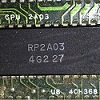
EDIT: I forgot to mention that volume balance between APU1 (squares) and APU2 (triangle+noise+DPC) may vary slightly from one 2A03 chip to the next. I believe Famitracker merely replicates the balance observed in jsr's Famicom. So while you may indeed find the APU2 in my recordings a little bit louder than in the tracker, it may very well sound different on another Famicom (or NES).
Ah yeah, I've read that several times around these forums and other places too. I kinda forgot it now but I was aware of the different volume balances between consoles, not only on the NES/Famicom but also in others.
Thanks for pointing it out.
EDIT: I've also read that the N163 has even wider volume differences between chips, which also depends on the amount of enabled channels. I think I saw that in this thread somewhere.
All of this makes me think that they weren't too consistent with the thing or maybe there was some limitation. I'd like to know a bit more about this, so maybe I'll take some time to read some stuff about the subject one of these days.
[Also, reading my reply again, it sounds a bit rough, but don't worry, it isn't intentional]
_______________________ This version of Dr. Mustache is outdated. Please download latest version here. [Dropbox (my FT stuff)]
Yeah, not all N163 chips are created equal, but there is a good reason for it. Since some games used 4 channels and others used 8, and considering that fewer channels result in louder output, some of the 4-channel games included more aggressive resistance values in their N163 chips to account for the volume differences (Megami Tensei II and Final Lap fall under this category). Other compensated with quieter software volumes (Rolling Thunder is one example of this).
Because of this, I put Rolling Thunder and Mappy Kids in my 8-channel NSF folder in spite of the fact they only use 4.
The louder output on fewer channels is related to the way the N163 cycles between channels to produce the sound, right?
EDIT: I have another question: Since the Famicom actually runs at 60.09 Hz, as I've read, this would obviously have some slight effect in the tracks you record. Do they run a tiny bit faster than they do in emulation software? Are there other noticeable effects on the songs?
_______________________ This version of Dr. Mustache is outdated. Please download latest version here. [Dropbox (my FT stuff)]
I couldn't give you a precise answer for your first question, but I can answer your second question: the HFC3, unlike the Power Pak, has no internal timer, so it does indeed use the 60.09Hz refresh rate. It does mean NSFs play a little bit faster than they do in. NSF players (assuming they don't also use 60.09Hz). The difference isn't really noticeable, but it's enough that the Famicom would go out of sync with the NSF player if you pressed play on both simultaneously.
Another update! I'm on a roll. Yesterday was all about the VRC6; today it's all about the N163. Indeed, I recorded four N163 NSFs (one request, and three NSFs I thought deserved the treatment), all with different channel configurations!
The "fix" in Pixelated Sky refers to a hanging 464 command about halfway through, as well as a broken N163 instrument that calls a non-existent wave (this works fine in the program, but introduces issues on export). Also, the volume balance between the 2A03 and N163 had to be adjusted in Warheart's cover, since 1-channel N163 results in nearly inaudible 2A03 audio unless certain precautions are taken.